Musical Instrument Icon Set 4: Elevating Visual Communication with Precision and Style
In an era where visual storytelling dominates digital and physical spaces, the right icon can make all the difference. Musical Instrument Icon Set 4 offers a curated collection of beautifully designed glyphs that cater to a wide range of creative and professional needs. From web design to print materials, these icons provide a seamless blend of functionality and aesthetic appeal.
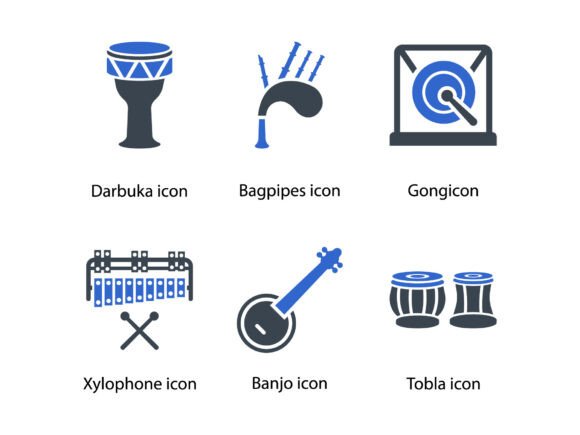
Designed with meticulous attention to detail, each icon in this set reflects the essence of its corresponding instrument. Whether it's the rhythmic allure of the Darbuka, the haunting tones of the Bagpipes, or the melodic charm of the Xylophone, every symbol is crafted to resonate visually and emotionally. This level of craftsmanship ensures that the icons not only serve their purpose but also enhance the overall design language of any project.
The Relevance of Musical Instrument Icons in Modern Design
The increasing demand for visual consistency across platforms has made high-quality icons more essential than ever. Musical Instrument Icon Set 4 addresses this need by providing a versatile toolkit for designers, developers, and content creators. These icons are ideal for use in websites, presentations, promotional materials, illustrations, infographics, and more.
As digital experiences become more immersive, the role of icons in guiding user interaction and conveying information efficiently cannot be overstated. A well-designed icon can communicate complex ideas in an instant, making it a powerful tool in both user interface (UI) and user experience (UX) design. With Musical Instrument Icon Set 4, users gain access to a library that supports clarity, creativity, and coherence in visual communication.
Trends Shaping the Use of Musical Instruments in Design
Current trends in design emphasize minimalism, adaptability, and cultural relevance. Musical Instrument Icon Set 4 aligns with these principles by offering icons that are both modern and timeless. The inclusion of traditional instruments like the Banjo and Tobla adds a layer of authenticity, while the contemporary design of the Gongicon and Xylophone caters to modern aesthetics.
With the rise of hybrid work environments and remote collaboration, the need for clear and consistent visual elements has grown. Designers often rely on icons to maintain brand identity across various mediums. Musical Instrument Icon Set 4 provides a reliable solution, ensuring that projects maintain a cohesive look whether they're displayed on a website, a mobile app, or printed material.
Moreover, as businesses seek to connect with diverse audiences, the use of culturally resonant symbols has become increasingly important. These icons offer a way to represent musical traditions and practices without resorting to clichés or stereotypes. By using these icons, designers can create content that is both informative and respectful of different cultural contexts.
Practical Applications Across Industries
The versatility of Musical Instrument Icon Set 4 makes it suitable for a wide range of industries. In education, for instance, these icons can be used in e-learning platforms, interactive lessons, and classroom materials to illustrate musical concepts. For educators, this can enhance student engagement and make abstract ideas more tangible.
In the entertainment industry, these icons can be integrated into marketing campaigns, event promotions, and merchandise design. A well-placed icon can capture the essence of a performance or a genre, helping to build a stronger connection between the audience and the content. For example, using the Darbuka icon in a promotional poster for a percussion workshop can immediately convey the event's focus and energy.
For entrepreneurs and small business owners, these icons can be a valuable asset in branding and advertising. Whether designing a logo, creating social media content, or developing a website, having access to high-quality icons can elevate the professionalism and appeal of any project. The availability of multiple file formats—EPS, SVG, and PNG—ensures that these icons can be adapted to different platforms and requirements.
Evolution of Icon Design and Its Impact on Creativity
Icon design has evolved significantly over the years, moving from simple, stylized representations to highly detailed and expressive graphics. This shift reflects broader changes in design philosophy, where the emphasis has shifted from mere functionality to emotional resonance and artistic expression.
Musical Instrument Icon Set 4 exemplifies this evolution. Each icon is not just a representation of an instrument but a piece of art in its own right. The attention to detail, such as the texture of the drumhead on the Darbuka or the intricate patterns on the Bagpipes, demonstrates how far icon design has come. These elements add depth and character, making the icons more than just visual markers—they become part of the narrative.
This level of sophistication also opens up new possibilities for creative professionals. Designers can use these icons to tell stories, evoke emotions, and create visual hierarchies that guide the viewer’s attention. For instance, in an infographic about global music traditions, these icons can serve as visual anchors that help organize and highlight key points.
Recommendations for Effective Use of Musical Instrument Icons
To get the most out of Musical Instrument Icon Set 4, it's important to consider the context in which the icons will be used. For web design, ensuring that the icons are scalable and compatible with different screen sizes is crucial. SVG files are particularly useful in this regard, as they maintain quality at any size without losing clarity.
In print materials, the choice of file format can affect the final output. EPS files are ideal for high-resolution printing, while PNG files offer flexibility for digital use. Understanding the strengths of each format allows users to make informed decisions that optimize the visual impact of their work.
Another best practice is to use icons consistently within a project. This helps maintain a sense of unity and professionalism. For example, if using the Gongicon in a presentation, it should be applied in a similar style and size throughout to avoid visual clutter and confusion.
Finally, pairing these icons with complementary text and imagery can enhance their effectiveness. A well-crafted caption or a related graphic can provide additional context and reinforce the message being conveyed. This approach not only improves readability but also enriches the overall design experience.